

CROSS COUNTRY SWEEP!
Quebec
Long live the Thistle
Although it lives on in the hearts and minds of many of its last members, the Thistle Curling Club was forced to close its doors and sell the building after the 1998-99 season. Over a century and a half of vitality and memorabilia - gone forever!
The loss of such a prestigious club with its invaluable heritage and importance to so many of Montreal’s curling fraternity is, to say the least, a modern-day tragedy.
For a variety of reasons, not the least of which was an obscenely prohibitive annual tax bill, the board of directors, headed by their president, Ann Drummie, closed the deed of sale on October 19, 2000. The new owners, local business men, plan to turn the premises into a grocery store, market, restaurant complex.
The club dates back to 1843 when early members actually curled on the frozen St. Lawrence River. In 1870 the first Thistle clubhouse was erected in the part of town now occupied by Place Ville Marie. By 1916, they had moved to their final location on Fort Street just a few blocks east of the old Montreal Forum.
A fire in the mid-thirties destroyed a magnificent second-floor skylight which ran the length of the clubhouse. The balcony which surrounded the three sheets of ice afforded spectators with a sensational view of the play below.
In addition to hosting a great many provincial events, the gentlemen’s club was the scene of regular social events. Prominent Montrealers were often featured as speakers. And names such as Atwater, Molson, Greenshields and Dick Irvin Sr. were among the city’s better known club members.
More recently, Guy Hemmings curled out of the club one year; while Francine Poisson represented Thistle and the province at the 1988 Scott. In the early eighties, Kevin Adams twice led Thistle rinks to the national mixed championship event.
The club was also the place that the McGill University curling team affectionately called home for so many years.
So, what went wrong? According to Drummie, “the business plan of the 1950’s was not realistic in terms of the demographic changes of the 1990’s. To remain profitable, a club has to adapt to the evolving membership base.”
Specifically, in a large metropolitan centre, there is increasing competition for the recreational dollar. In the last half of the century, there was a decline in the need for a social identity which the Thistle Club had traditionally provided. The club’s downtown, cramped location was also something of a drawback. Parking difficulties probably contributed to a drop in membership as former members opted for clubs closer to their suburban homes. Drummie also points to a dwindling volunteer base as a cause for concern.
The real killer, however, was the incredible increase in the Montreal business tax which became an insurmountable burden on the club. In the final few years, it cost $90,000 to operate the establishment on membership revenues of just $60,000. Over one third of the club’s expenses went towards taxes! A loan of $125,000 to help cover back taxes, a line of credit and electricity put the club deep in debt.
Having run out of options, the club was sold for $450,000. From that sum, $175,000 went to pay off back taxes, lawyers, agents and evaluators. Of the remaining $275,000, the club used approximately $25,000 to settle outstanding debentures held by members known to exist in the Montreal area. $250,000 is currently invested in a G.I.C. and it is this amount which the five-member board of directors has at its disposal.
The well-worn, full-sized snooker table went with the building. Most of the furniture ended up in members’ homes. The trophies, president’s board, seal and pictures were either distributed to other clubs or have been preserved in the archives of the McCord Museum. Some items are still in storage.
There is actually another $50,000 in outstanding debentures to be disposed of once former members can be located. That leaves a grand total of $200,000 as a surplus!
Two proposals are on the table. One would see a reimbursement of membership fees going back to 1994. This is not only logistically difficult but the legalities of such a move are unclear. Some would view this as the more greedy option.
The more agreeable solution would be to use the money as a funding source for philanthropic projects involving provincial curling. Such things as improving the level of instruction and coaching by underwriting certification programs and courses might be considered. The fund could support the efforts of Curling Quebec in terms of subsidizing fees for instructors.
Schools might be encouraged to become more active in curling with supervisors paid out of the fund. The money could also be used to sponsor little rock and junior bonspiels with youngsters participating for fun rather than cash.
“The board would like to see the funds used to improve the overall quality of curling in Quebec,” admits Drummie. “But the big question is who would monitor its dispersal. We might place the money into an existing fund while maintaining control over its spending.”
She is adamant, however, that Thistle has no plans either to relocate or to use their surplus to subsidize other curling clubs. Whether the funds end up in a trust, a fund or a foundation, once there is a legal determination of where the money can go, the board and the remaining members of the club will consider its future.
“The whole matter has been very hard for me,” confesses a cerebral Drummie. “The moral of the story is to really know the ‘business of curling’ and how it relates to your particular situation. And, if anyone reading this can provide input as to what should be done with the surplus, any advice would be greatly appreciated.”
With neither a clubhouse nor ice, the Thistle still survives in a virtual sense. It still has members and they have maintained their membership as a curling club registered with “The Branch”. Members get together for social events. They curl in bonspiels using the name, and although most have joined other clubs in the greater Montreal area, their hearts will always be with those demanding three sheets of ice on Fort St.
In addition, the artifacts and memories will live on in an archival video production nearing completion by longtime member Kevin Ross. And there is the Thistle website at: http://www.thistle.qc.ca/
The Thistle Curling Club is dead and gone. Long live the Thistle!
To find out what's happening across the rest of the country, subscribe to Sweep! Curling's Magazine
by Phil Knox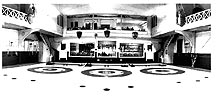 "Breaking up is hard to do.". Neil Sedaka was spot on with his assessment of a love affair gone south. And so it was that recently a venerable Montreal institution had no choice but to succumb to a divorce from the local curling scene.
Contents
FEATURES
X-COUNTRY Sweep!
IN THE HOUSE
Scott Tournament of Hearts Review
Nokia Brier Review
2001 Ford Worlds Preview
Why can’t Colleen get a break?
by Perry Lefko
Guy Hemmings Photo Tribute
The Old Man & The Kids
by Con Griwkowsky
BC
Honours for Law
by Richard Brower
Alberta
Jedi-Knight Championship
by Guy Scholz
Saskatchewan
Strife on the prairies
by Murray McCormick
Manitoba
Olson left his mark
by Jim Bender
Ontario
Sponsor Energizes TCA Mixed
by Dan Yamasaki
Quebec
Long live the Thistle
by Phil Knox
Atlantic
Three more titles
by Meg Wallace
Beyond the Linescore
The shooting percentage
by Alex Roberts
Harry at Large
Brier week - from the other side
by Neil Harrison
Young & Restless
That lonely feeling
by Gail Cabana-Coldwell
Shop-rrrs Guide
Truth & Rumour
The Final Word
Bizarre week in Bytown
by Con Griwkowsky